To file an injury claim when both a rideshare driver and a third-party motorist share fault, you must initiate a multi-party claim involving both drivers’ insurance carriers and the company’s commercial policy. Compensation is recovered by establishing each party’s percentage of liability under the jurisdiction’s legal standards. This allows you to aggregate coverage from multiple insurance pools to fully cover your medical bills, lost wages, and pain and suffering.
Navigating the Complexity of Shared Liability in Rideshare Crashes
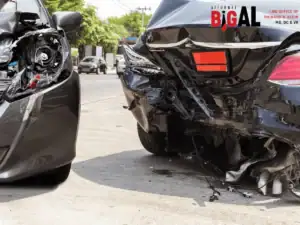
When you are involved in an accident as a passenger or a bystander, and the evidence suggests that both the Uber or Lyft driver and another motorist contributed to the collision, you are entering one of the most complex arenas of personal injury law. Unlike a standard two-vehicle crash, a multi-party rideshare accident involves overlapping insurance layers, differing corporate interests, and the challenge of apportioning fault.
During a recent case audit of a firm in The Fan, we encountered a situation in which a rideshare driver made an abrupt turn while a third-party motorist was speeding. Both contributed to the impact. For the victim, this meant navigating two separate insurance adjusters who were more interested in blaming each other than providing a fair settlement. This is why understanding the mechanics of “split liability” is essential for your recovery.
The Role of Fault and Liability
Liability in these cases is rarely 100% attributable to any one person. In many jurisdictions, fault is divided by percentage. However, in certain areas, the laws are extremely strict; for instance, some jurisdictions follow a “contributory negligence” rule, under which even a 1% share of fault on the part of the victim could, in theory, bar recovery. Fortunately, as a passenger, you are rarely at fault. Your primary hurdle is getting the two at-fault parties to agree on how much of the bill each should pay.
A Richmond, VA, rideshare accident lawyer understands how to prevent these insurance companies from pointing fingers indefinitely to avoid payment. By determining the exact percentage of each driver’s negligence, we ensure the combined policy limits cover the full value of your claim.
Establishing a Clear Chain of Evidence
To successfully recover from multiple parties, your legal team must build an airtight case against both drivers simultaneously. This involves more than merely reading a police report; it requires a thorough review of digital and physical data. In a high-traffic area like Church Hill, we often find that eyewitness testimony and surveillance footage from local businesses are critical when drivers give conflicting stories.
Necessary Documentation for Multi-Party Claims
- The Telematics Data: Rideshare apps track speed, braking, and GPS location. This data is vital to prove if your driver was distracted or driving aggressively.
- The “Black Box” Retrieval: Many modern vehicles, especially those used by third-party commercial motorists, have Event Data Recorders (EDRs) that capture the final seconds before impact.
- Surveillance Footage: Securing surveillance footage can demonstrate whether a third-party driver failed to stop at a sign, which complements the app data showing that the rideshare driver was speeding.
Table: Evidence and Liability Sources
| Evidence Type | Purpose | Provider |
| Police Report | Initial Fault Determination | Local Law Enforcement |
| App Logs | Driver Activity Status | Uber/Lyf |
| Medical Records | Linkage of Injury to Impact | Your Healthcare Provider |
Applying the Kinetic Equity Protocol to Solve Your Claim
At our firm, we don’t just “handle” cases; we apply a proprietary strategic framework known as the Kinetic Equity Protocol. This method is specifically designed for multi-party rideshare litigation to ensure no stone is left unturned and no insurance policy is left untapped. The Kinetic Equity Protocol focuses on the science of the collision and the financial structure of the insurance companies involved.
First, we conduct a Force Multiplier Analysis. We evaluate the physics of the crash; if two vehicles hit you, the force is cumulative. We retain accident reconstructionists to establish that the combined negligence caused a “kinetic event” that warrants more serious non-economic damages, such as pain and suffering. This is vital when insurers try to minimize the impact of a “low-speed” collision.
Second, we engage in equity policy mapping. We map out every available insurance pool, including the rideshare company’s $1 million liability policy, the driver’s personal gap insurance, and the third-party driver’s bodily injury coverage. By mapping these out, we ensure that the high-value commercial policy remains the primary source of recovery, rather than allowing the corporate giant to shift the blame to an underinsured private motorist.
Finally, we perform a settlement velocity check. Insurance companies often use “delay tactics” when multiple parties are involved, hoping the victim will settle for the first low offer. Our protocol uses strict legal deadlines to maintain “velocity,” forcing adjusters to provide a combined settlement offer. This ensures you aren’t stuck waiting for years while the insurance companies of two billionaires argue over a few percentage points of fault.
By applying this protocol, our Richmond rideshare accident lawyers can streamline the process, ensuring that even if the legal technicalities are complex, your path to compensation remains clear and fast.
Debunking the Myth of the “Automatic” Million-Dollar Payout
One of the most common industry myths is that, because Uber and Lyft carry $1,000,000 in liability coverage, any victim is “automatically” entitled to a massive payout regardless of the facts.
The Reality: The $1 million policy is a ceiling, not a floor. To access that policy when another driver is also at fault, you must prove that the rideshare driver’s negligence was a “proximate cause” of your injuries. Without an experienced rideshare accident lawyer in Richmond, VA, the rideshare company’s lawyers will argue that the third-party motorist was the sole cause of the accident to shift the entire financial burden away from their policy. Our job is to prove the shared fault so that the largest policy remains on the table.
Seeking Justice for Car Accident Victims
Attorney Big Al is committed to standing by injured riders and drivers every step of the way, ensuring the responsible parties are held fully accountable. Our brand is compassionate, trustworthy, and assertive. We’re dedicated advocates who guide clients through challenging legal situations with empathy and determination. You can count on us to protect your rights with professionalism and strength.
Whether your accident occurred during the busy commute in Short Pump or on a quiet side street, we understand the stress you are facing. We believe in justice, integrity, and a relentless focus on our clients’ success. Every decision is made with your best interests in mind, ensuring you receive the care, guidance, and compensation you are entitled to. With us, you’re more than just a case; you’re a priority.
Our Car Accident Attorneys Only Win When You Win
We understand that the cost of legal representation can be a concern. That’s why we work on a contingency-fee basis, meaning you don’t pay us unless we win your case. Our Richmond rideshare accident lawyers have a proven track record of success and a personalized approach. We don’t just handle cases; we fight for outcomes.
No Win, No Fee – What This Means for You
When we say “no win, no fee,” we mean it. You don’t have to worry about upfront costs or hourly fees. You’ll feel confident and supported at every step as we simplify complex legal processes and relentlessly pursue the best possible result for you.
People Also Ask (FAQ)
What happens if the rideshare driver is off the clock? If the driver was not logged into the app, the rideshare company’s commercial policy will not apply. In this case, you would file against the driver’s personal auto insurance. However, if they were “available” but hadn’t accepted a ride (Period 1), a lower tier of corporate coverage (typically $50,000/$100,000) may still apply.
May I sue both drivers simultaneously? Yes. In cases of shared fault, it is often necessary to name both parties in a lawsuit to ensure that the total amount of damages awarded can be collected from all available insurance sources. This prevents one driver from blaming the “empty chair” of an absent defendant.
How long do I have to file a rideshare claim? In Virginia, the statute of limitations for personal injury is typically two years from the date of the accident. However, because digital evidence like app logs can be overwritten or deleted by corporate servers, it is vital to have a lawyer issue a “spoliation letter” immediately.
Schedule a Free Consultation
Take the first step toward the compensation you deserve. Attorney Big Al wants you to feel reassured, empowered, and confident. When you engage with us, you should feel supported and clear about the next steps in securing the compensation and justice you’re entitled to. We offer free consultations to discuss your case. During this consultation, we’ll review the details of your accident, answer your questions, and provide you with a clear understanding of your legal options.
Contact us today for a free consultation, and let’s evaluate your case together. We’ll explain your options and show you how we can help you secure the justice you’re entitled to.